
Do you frequently feel on edge, uneasy, or consumed by worries about what could go wrong? Anxiety can disrupt your performance at work or school, strain family dynamics, create tension in romantic relationships, and complicate everyday social interactions.
Do you often struggle with nervousness, low motivation, relationship difficulties, or intrusive thoughts? Do you find yourself feeling insecure or constantly wondering how others perceive you? These emotional struggles could be linked to an anxiety disorder. The good news is that anxiety is highly treatable with the right support.

The National Institute of Mental Health reports that over 20% of U.S. adults aged 18 to 60 have experienced an anxiety disorder within the past year. Even before the COVID-19 pandemic, anxiety rates were already increasing. The pandemic only intensified this ongoing trend. Mental health professionals observed a noticeable rise in both the frequency and intensity of emotional struggles during this period. In fact, the University of Vermont’s “Hedonometer” recorded the lowest levels of reported happiness ever seen in the U.S. While there has been some improvement since then, overall well-being remains lower than pre-2020 levels and continues to trend downward Contemporary life often sets the stage for heightened anxiety. Factors like remote work, reduced social engagement, limited time with friends, weaker family connections, increased indoor living, and excessive screen use all play a role in rising anxiety levels. More and more people are struggling to cope with stress, and some turn to alcohol or other harmful habits as a way to self-soothe
Anxiety can manifest in various ways depending on the individual and stage of life. Conditions such as generalized anxiety disorder, panic attacks, social anxiety, and specific phobias are all classified as anxiety disorders.
Our brains are naturally programmed to respond to anxiety. When faced with perceived threats-like a wild animal or an oncoming vehicle-anxiety activates our survival instincts. It can also push us to act in less extreme situations, such as hurrying to catch a flight or finding the motivation to finish a work project under pressure. If we don’t manage anxiety triggers in a healthy wayor if those triggers continue over an extended period—we can become trapped in stress-driven thought patterns. This can lead to unhelpful coping habits that prolong feelings of anxiety, even after the original source is no longer present.
The symptoms you experience can vary based on the type of anxiety disorder affecting you. Social anxiety may cause challenges with speaking in public, participating in social events, or, in some cases, even leaving home. Generalized anxiety disorder (GAD) is typically marked by ongoing feelings of worry or unease. Additional symptoms may include restlessness, tiredness, trouble focusing, sleep disturbances, irritability, and physical discomforts like headaches, muscle tension, stomach issues, or unexplained aches and pains. Panic attacks can involve symptoms such as a rapid heartbeat, excessive sweating, shaking, chest discomfort, and a sense of losing control. Phobias are strong, irrational fears that exceed the real level of threat presented by a specific object or situation. Common examples include fear of flying, enclosed spaces, or high places.
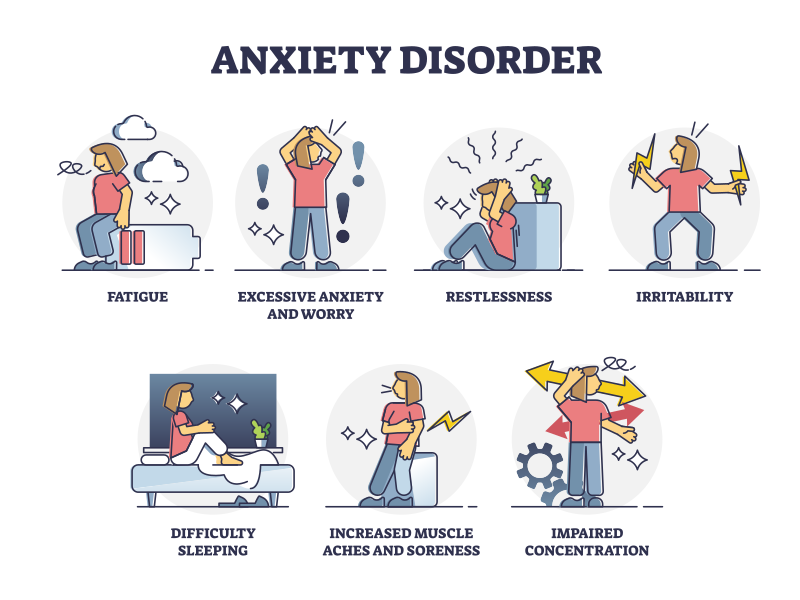
Both genetic and environmental factors play a role in the likelihood of developing an anxiety disorder. A family history of anxiety or other mental health conditions, along with exposure to stressful or traumatic life events, can increase your vulnerability to anxiety. Certain medical conditions-such as thyroid problems or irregular heart rhythms have also been linked to a higher risk of anxiety. Additionally, excessive caffeine consumption or substance use may heighten the chances of experiencing anxiety symptoms.
Anxiety disorders often improve significantly with psychotherapy, also known as talk therapy. For therapy to be truly effective, it should be tailored to your unique needs and experiences. With the right therapist and treatment approach, it’s possible to regain a sense of stability, reduce constant worry, and cultivate greater peace and satisfaction. You can become more present in your daily life and move toward a more fulfilling and purposeful future. Cognitive Behavioral Therapy (CBT) helps individuals develop new ways of thinking, reacting, and responding to situations to lessen feelings of fear and anxiety. This approach is well-supported by extensive research
Exposure therapy, a technique within Cognitive Behavioral Therapy (CBT), is commonly used to treat anxiety disorders. It aims to address the fears at the root of the anxiety by gradually helping individuals face situations they have been avoiding. In some cases, relaxation techniques are incorporated to support the process. Acceptance and Commitment Therapy (ACT) uses techniques such as mindfulness, setting personal goals, and other tools to help reduce anxiety and emotional distress. Medication can play a supportive role in making positive lifestyle changes. It may help stabilize your mood, enhance daily functioning at home and work, and make it easier to focus on self-care. Often used alongside therapy and holistic approaches, medication can strengthen your ability to maintain healthy habits like regular sleep, balanced nutrition, and consistent physical activity.
At ShowPathway Mental and Wellness Services, PLLC, we understand how deeply anxiety can impact your life-your focus, relationships, energy, and peace of mind. Led by Yetunde Fadeyibi, PHNP, our team offers personalized online therapy and medication management designed to help you regain calm, build resilience, and feel more in control. Whether you’re struggling with generalized anxiety, panic attacks, phobias, or social anxiety, we’ll work with you to find treatment that fits your unique needs. If you’re located in Texas, New Jersey, Washington, Oregon, or Montana, reach out today, to take the first step toward a calmer, more empowered life.