
Bipolar disorder is a complex mental health condition marked by intense emotional highs, known as manic or hypomanic episodes, and deep lows, referred to as depressive episodes. Managing the condition typically involves a combination of therapy, lifestyle adjustments, and in many cases, medication.
Maecenas curae eu quis vehicula mus mattis blandit ullamcorper litora.
Maecenas curae eu quis vehicula mus mattis blandit ullamcorper litora.
Bipolar disorder is a chronic and serious mood condition marked by episodes of mania, hypomania, and, in some cases, major depression. These episodes can vary in duration, lasting from several hours to a week or more. Seeking professional mental health care can significantly reduce the heightened risk of suicide that may accompany these mood shifts.

• Bipolar I disorder is diagnosed when an individual has had at least one manic episode that lasts a minimum of seven days or is severe enough to necessitate hospitalization. While many people with Bipolar I also experience major depressive episodes, this is not always the case.
• Bipolar Il disorder is characterized by recurring episodes of depression along with periods of hypomania, which is a less intense form of mania. Although individuals with Bipolar Il do not experience full manic episodes, the persistent depressive symptoms can make daily functioning more challenging than for those with Bipolar I.
• Cyclothymic disorder, or cyclothymia, involves ongoing mood fluctuations that persist for at least two years. Individuals with this condition typically alternate between phases of hypomanic and depressive symptoms, with brief intervals of stable mood, known as euthymia, occurring between episodes.
• Other specied or unspecied bipolar disorder is diagnosed when an individual experiences episodes of unusualy elevated mood that sugest bipolar disorder, but do not fully met the criteria for Bipolar I, Bipolar II, or Cyclothymic disorder.
Dapibus sollicitudin himenaeos nullam montes auctor interdum accumsan. Metus dapibus turpis consectetur pharetra dignissim morbi. Condimentum cras magna purus fusce bibendum turpis gravida consectetuer dignissim iaculis senectus. Cubilia ipsum sollicitudin convallis ornare at per letius.
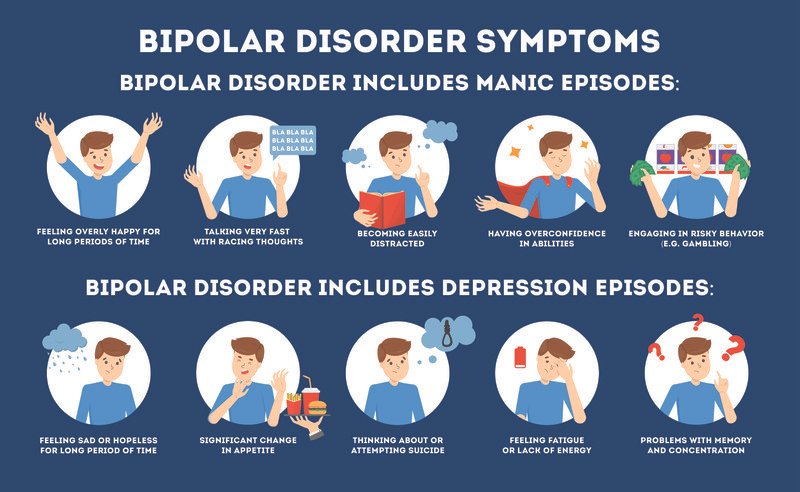
Bipolar disorder is characterized by the presence of both manic or hypomanic episodes and periods of depression.
• Mania is a mental state marked by unusually high energy, heightened activity, and a decreased need for sleep. During a manic episode, a person may speak rapidly, exhibit excessive self- confidence, experience grandiose thoughts, and engage in impulsive or risky behaviors, such as substance use or unsafe sexual activity.
• Hypomania is a less intense form of mania, involving elevated mood, increased energy, and heightened activity levels. These episodes are often marked by bursts of productivity and creativity, which may later be followed by significant depressive periods
• A major depressive episode involves an extended period of deep sadness, hopelessness, and emotional distress that disrupts daily life. It can make everyday tasks—like eating, sleeping, working, or caring for loved ones-feel overwhelming. Feelings of worthlessness and despair are common, and in some cases, thoughts of self-harm or suicide may arise. If you or someone you know is experiencing these symptoms, it’s essential to seek professional help right away.
Dictum ornare torquent pretium litora risus odio vulputate feugiat amet
Dictum ornare torquent pretium litora risus odio vulputate feugiat amet
Dictum ornare torquent pretium litora risus odio vulputate feugiat amet
Dictum ornare torquent pretium litora risus odio vulputate feugiat amet
The evaluation might involve: A thorough physical examination may be conducted to uncover any underlying medical conditions contributing to your symptoms. Lab tests might also be requested as part of the process. Psychiatric evaluation. A mental health professional may discuss your emotional patterns, behavioral tendencies, family history, and any symptoms you’ve experienced. You might also be asked to fill out a questionnaire or self-report form. Monitoring your mood. Keeping a record of mood shifts, sleep habits, and related behaviors can provide valuable insight and assist in making a more accurate diagnosis
Both genetic and environmental influences can raise the risk of developing bipolar disorder. Having a close family member with bipolar disorder increases your chances of being affected by the condition. Additionally, significant trauma or highly stressful life events can act as triggers for manic or depressive episodes. Substance use, including alcohol and drugs, can further disrupt mood stability and intensify the symptoms associated with bipolar disorder.
A well-rounded psychiatric treatment plan is widely regarded as the most effective method for managing bipolar disorder. This type of care typically includes a combination of therapy, education about the condition, lifestyle modifications, and, when appropriate, the use of medication. Treatment can helplessen how often manic or depressive episodes occur, as well as reduce their severity and length.
• Various medications, such as mood stabilizers like lithium, anticonvulsants, and second-generation antipsychotics, have proven effective in lowering the risk of hospitalization for individuals with bipolar disorder.
• Therapy can be highly beneficial in teaching individuals new coping strategies, reducing symptoms, and making it easier to navigate life with bipolar disorder.
• Psychoeducation, which involves learning about the symptoms and treatment options for bipolar disorder from a mental health professional, is often a valuable part of care.
• Adopting effective self-care habits—like maintaining a balanced diet, engaging in regular physical activity, following a consistent daily routine, and avoiding substance use can greatly contribute to overall improvement.
Psychological and medical interventions tend to be more effective when started during the early stages of bipolar disorder, compared to initiating treatment in more advanced phases of the condition. If you are currently prescribed medication for bipolar disorder, it’s essential to follow the treatment plan outlined by your psychiatrist or mental health provider. Do not discontinue any psychiatric medication without first consulting a medical professional. While finding the most effective treatment may require some adjustment, bipolar disorder often responds well to proper care.
Nostra inceptos nec libero quisque adipiscing enim diam dignissim dis dictumst et. Dictumst at dignissim montes diam pharetra libero.
Nostra inceptos nec libero quisque adipiscing enim diam dignissim dis dictumst et. Dictumst at dignissim montes diam pharetra libero.
Nostra inceptos nec libero quisque adipiscing enim diam dignissim dis dictumst et. Dictumst at dignissim montes diam pharetra libero.
At ShowPathway Mental and Wellness Services, PLLC, we understand the complexity of living with bipolar disorder-and we’re here to help you find stability, clarity, and support. Led by Yetunde Fadeyibi, PMHN, our team provides compassionate, evidence-based online therapy and medication management for residents of Texas, New Jersey, Washington, Oregon, and Montana. Whether you’re navigating depressive lows, manic highs, or simply seeking better tools to manage your diagnosis, we’re committed to walking alongside you with care tailored to your needs. Reach out today, to begin building a healthier, more balanced life.